
Struggling with a small room that feels cramped and uncomfortable? The good news is—you don’t need more space, you just need smarter design.
Small room decorating ideas that maximize space aren’t about expensive furniture or perfect trends. They’re about using simple techniques that make your space feel bigger, brighter, and more comfortable. In fact, smaller spaces often create the most cozy and homey environments when designed correctly.
How to make small room look bigger ?
When decorating small spaces, there are several interior design principles you should follow. These principles include:
- Vertical and horizontal illusions.
- The use of vertical patterns.
- Light colors.
In the next section of this blog post, we will share practical tips based on these interior design principles to help make your home look bigger.
Best Small Room Decorating Tips
Use Vertical Lines to Create Height in Small Rooms
By illusion, a vertical line appears longer than a horizontal line, even if they are the same length. This vertical line principle is a powerful tool in interior design for small spaces because it draws the eye upward, giving the illusion that the space is taller than it actually is. We can apply the principles of vertical lines to many elements in our home.
Here are some examples of how to apply the vertical lines principle in your home decor:
- Wallpaper with vertical elements or vertical stripes
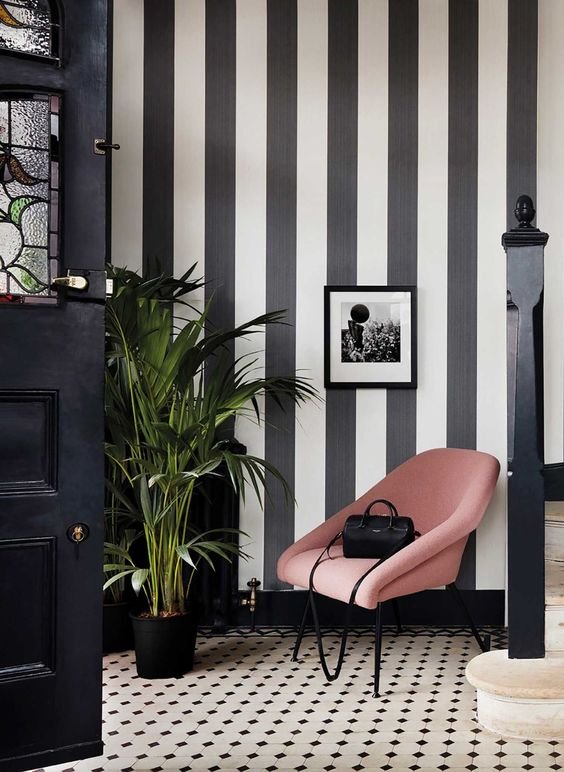
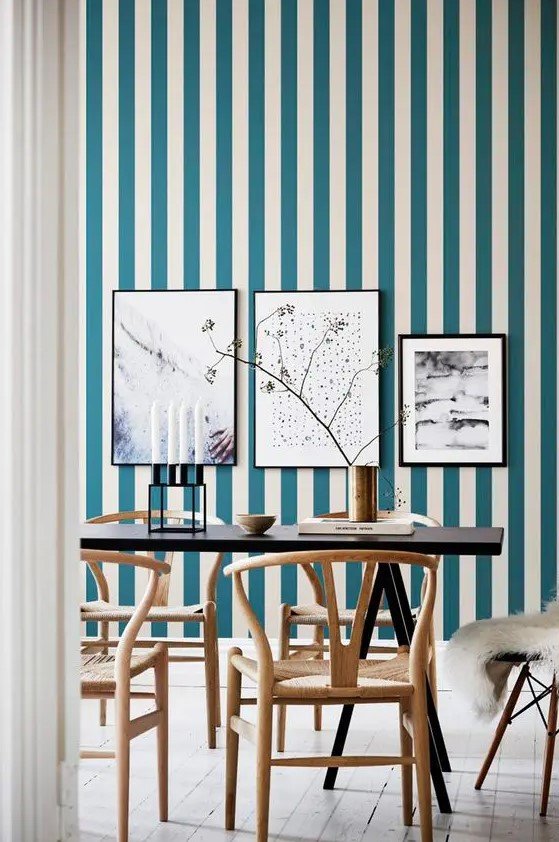
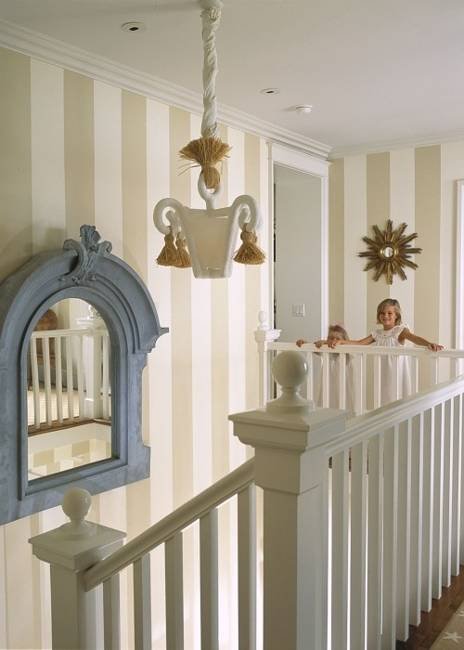
- Hang curtains with vertical stripes
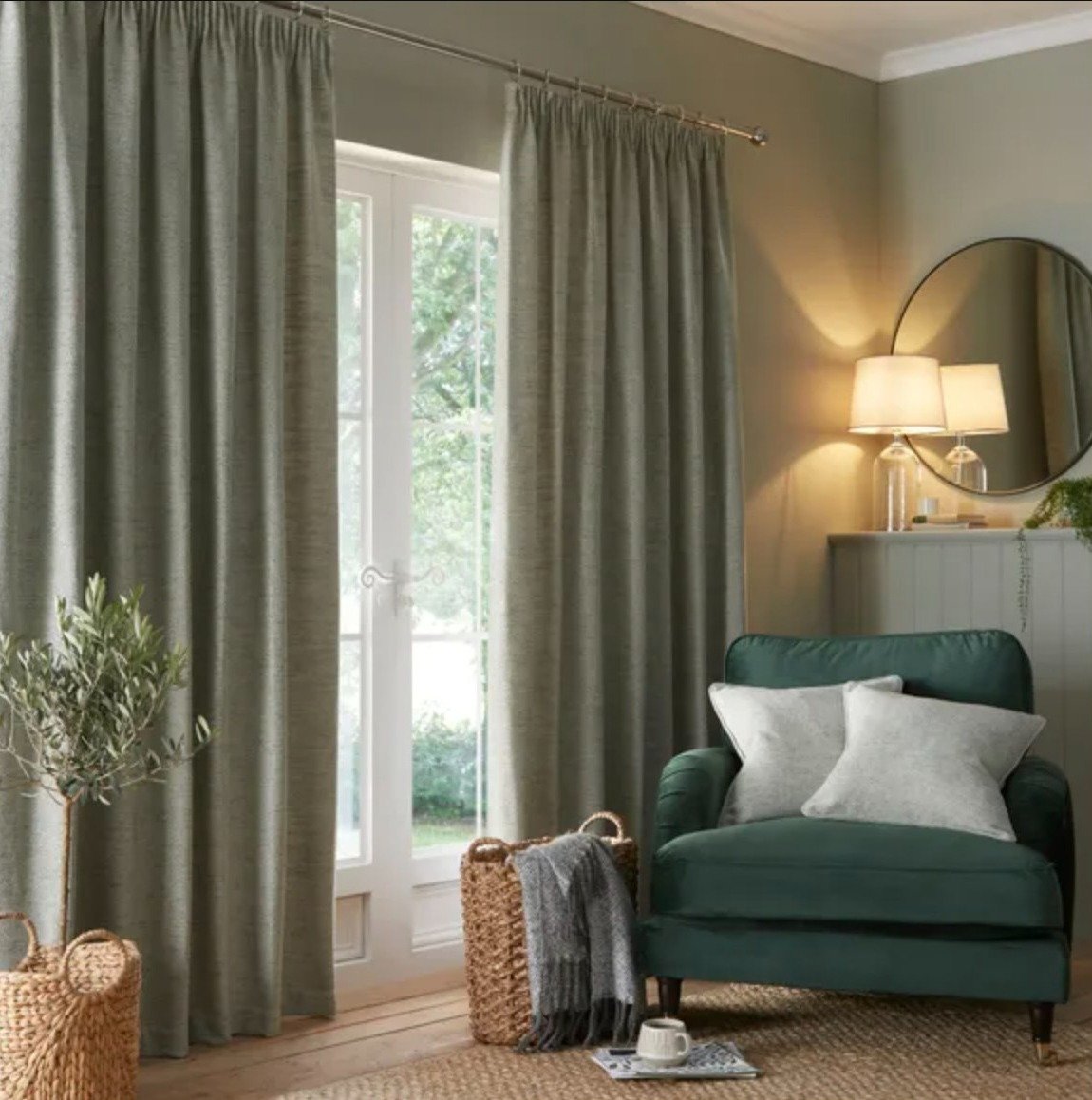
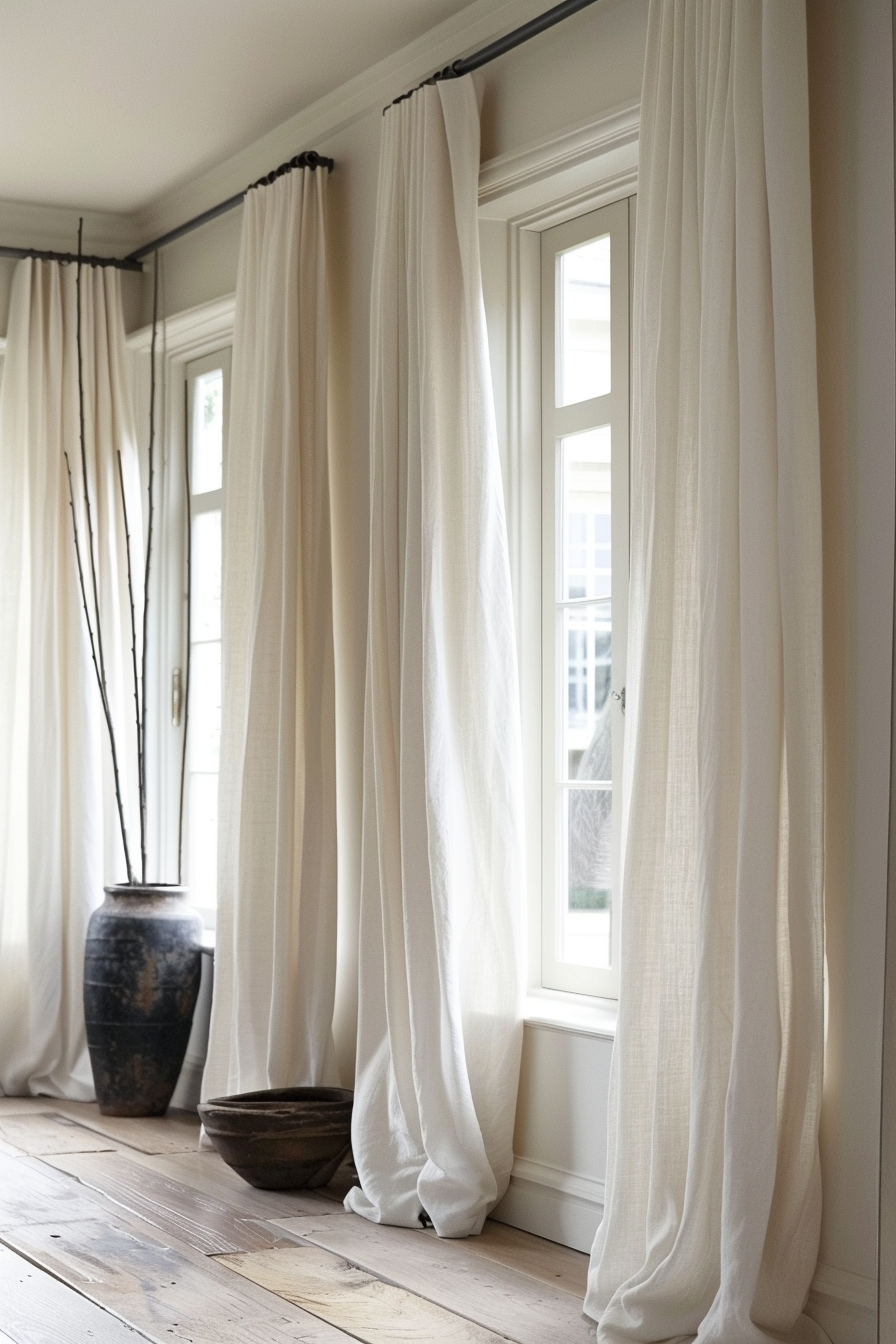
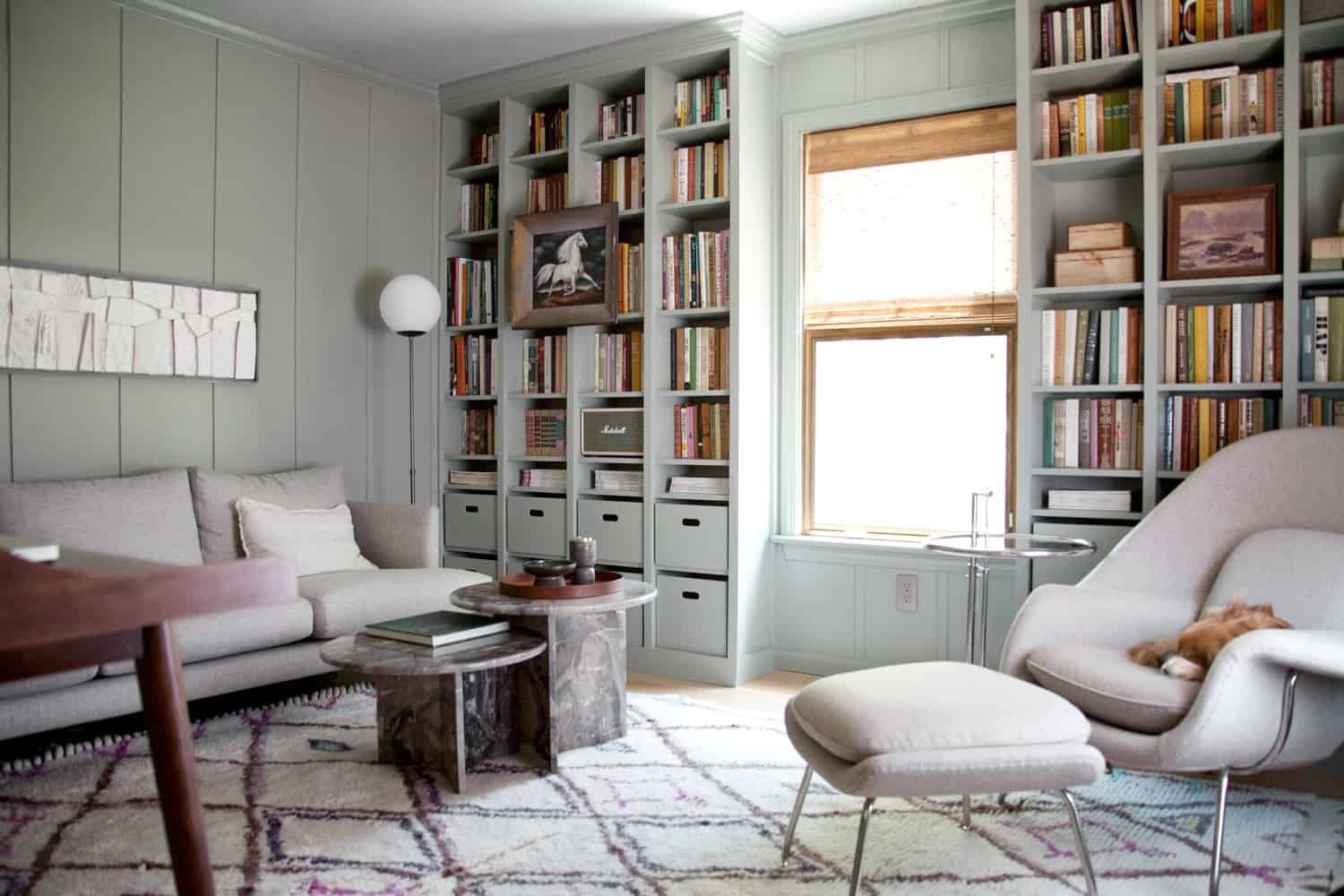
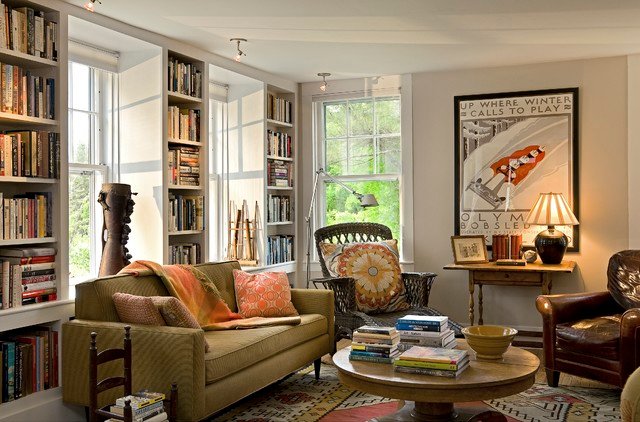
- Vertical full height bookshelves
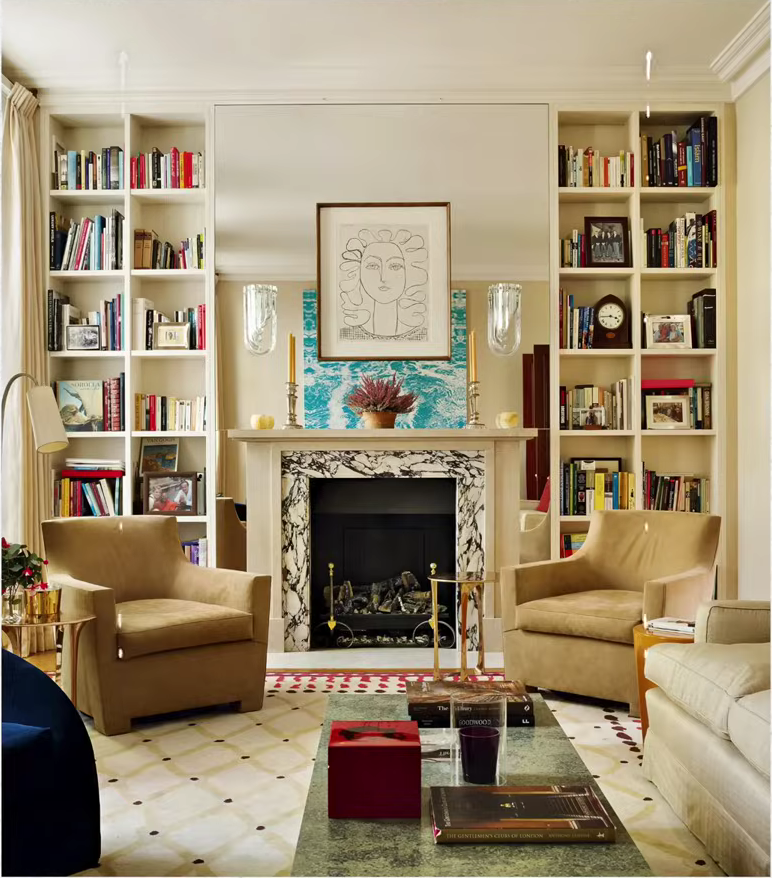
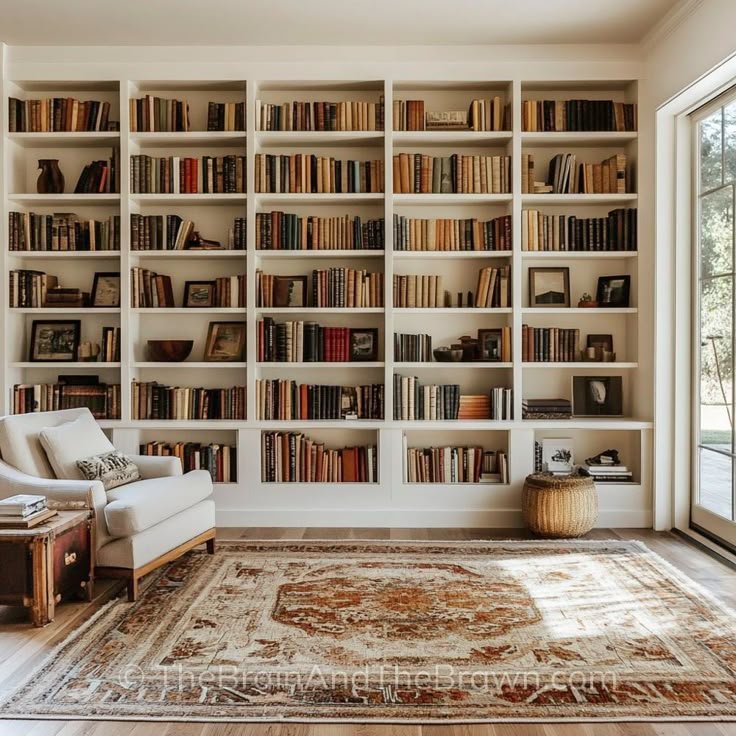
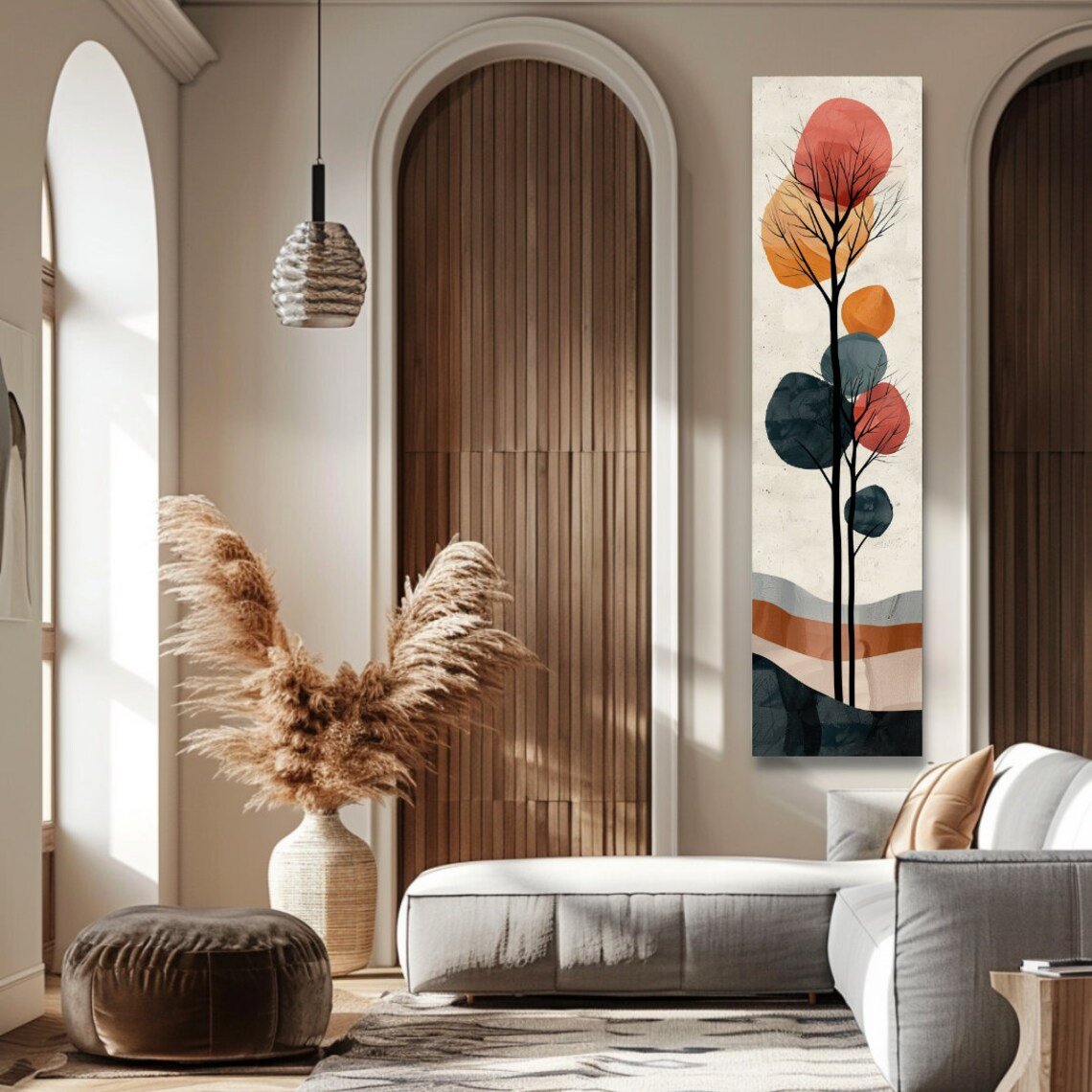
- Vertical wall art
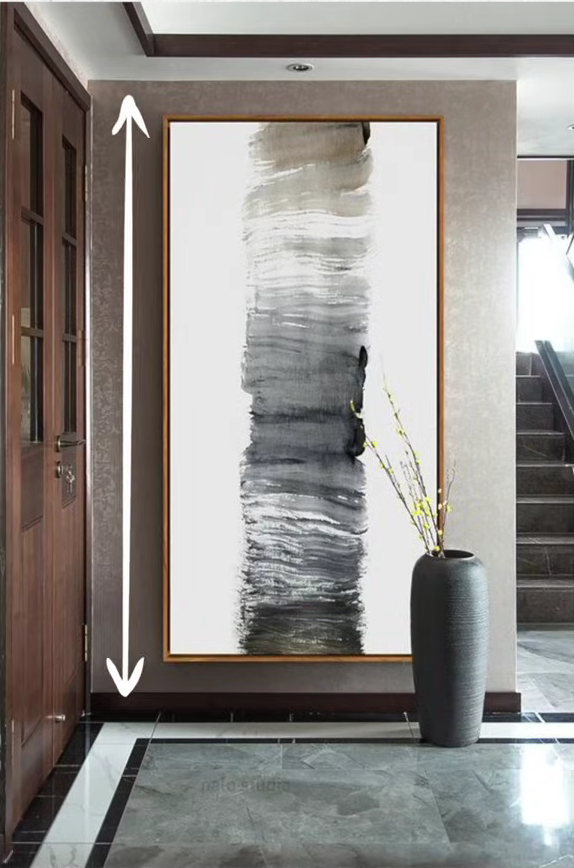
- Stack images vertically
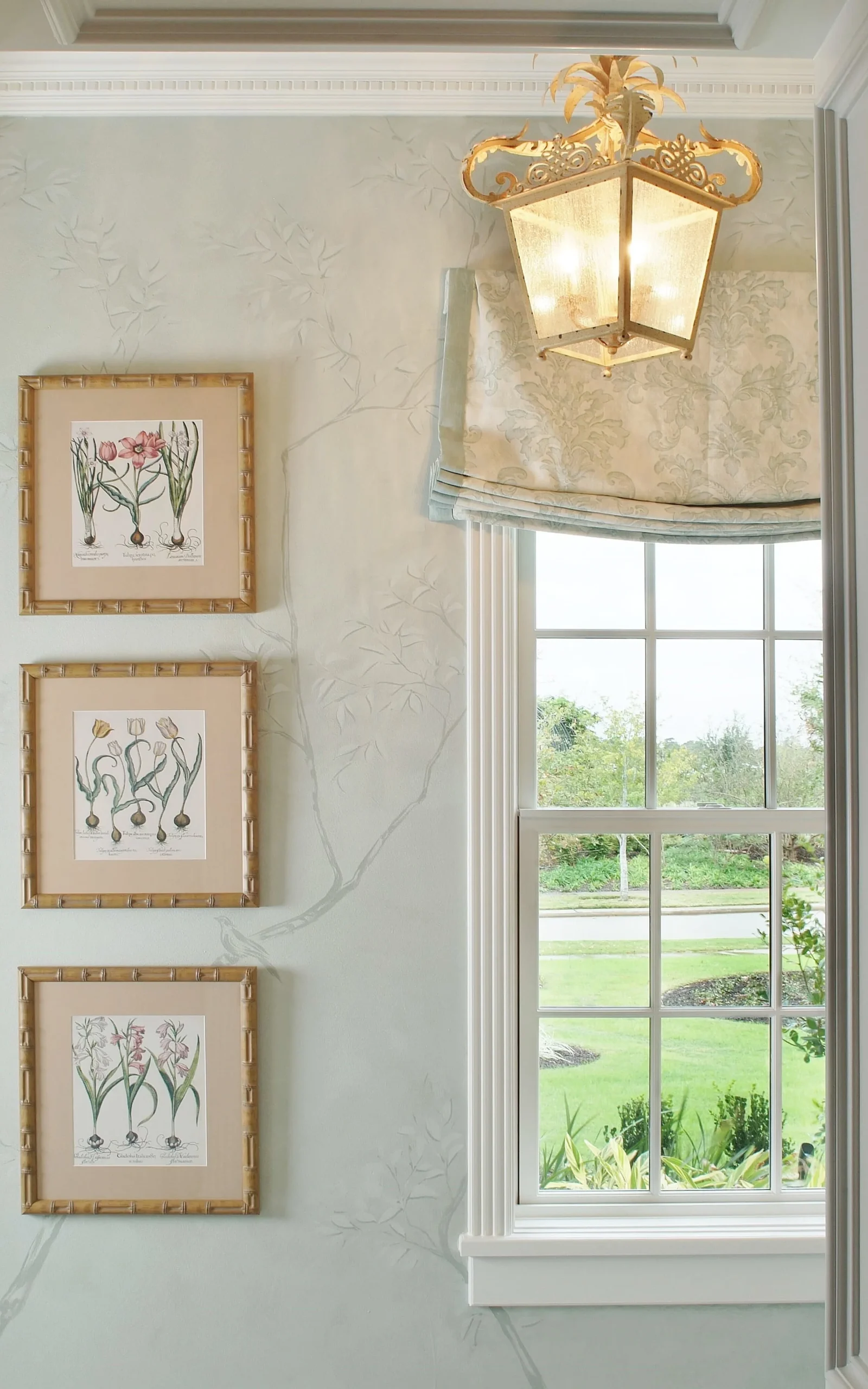
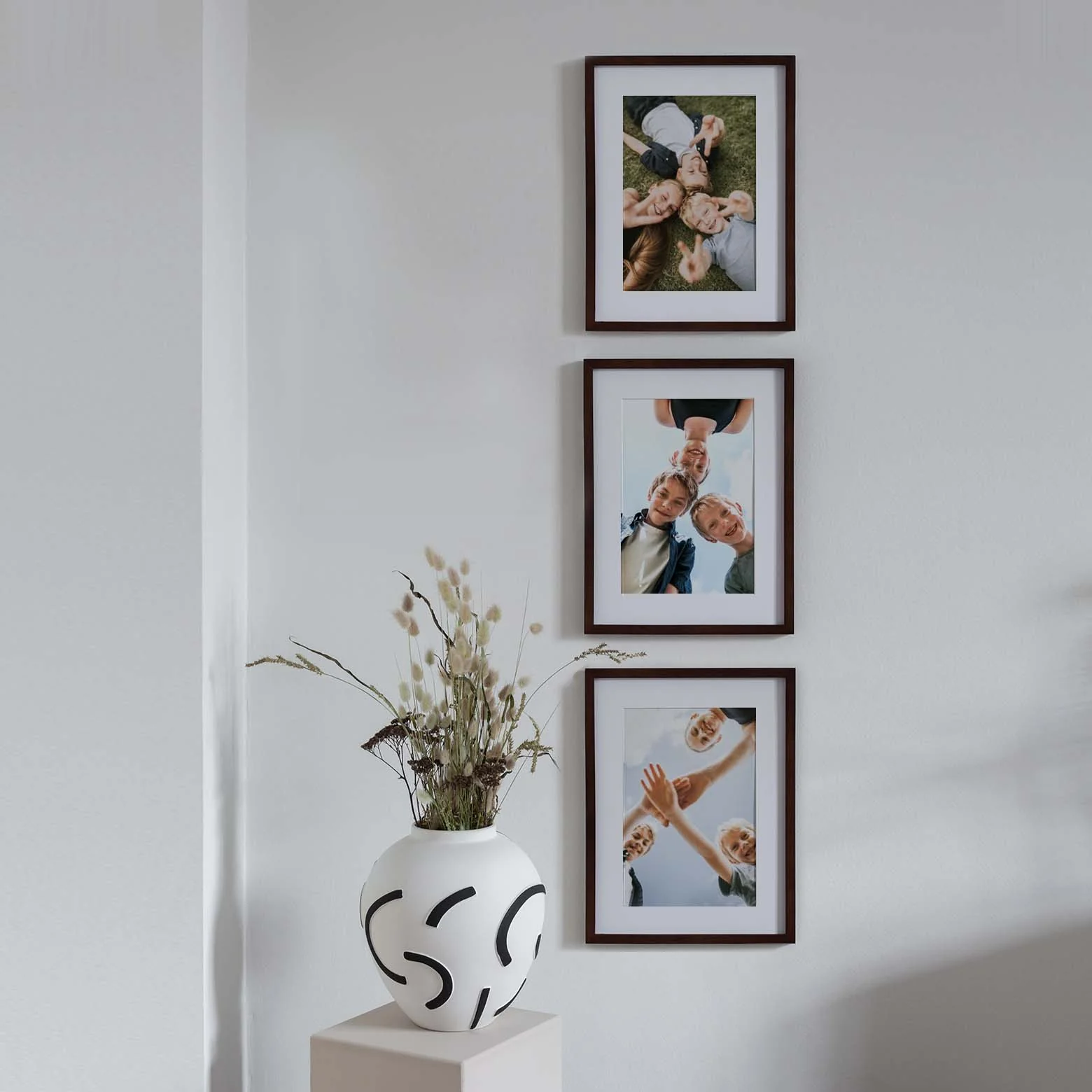
As you can see, anything that goes vertical naturally draws the eye upward, creating the illusion that a space is taller than it really is. Look around your home and identify areas where you can apply this principle to enhance the overall feel of your space.
Low Furniture: Keeping Furniture Close to the Ground in Home Decor
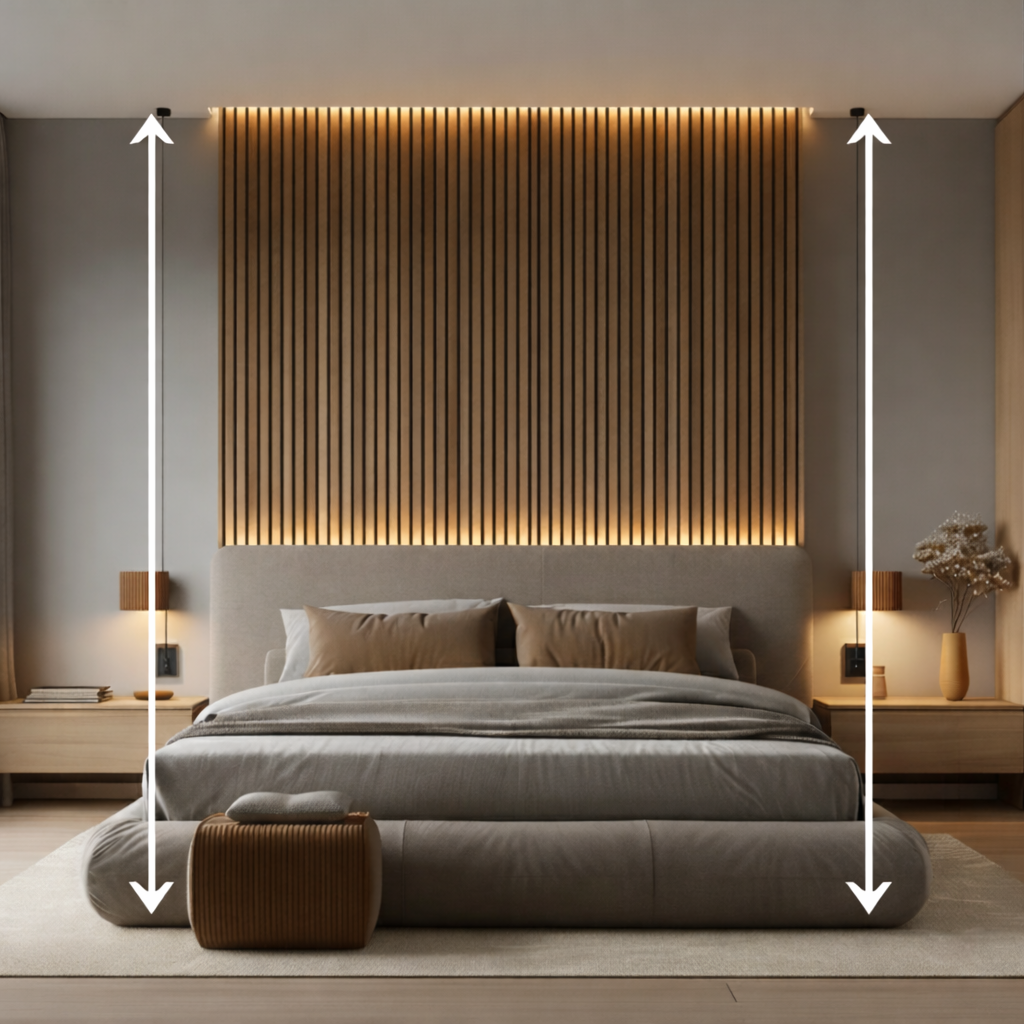
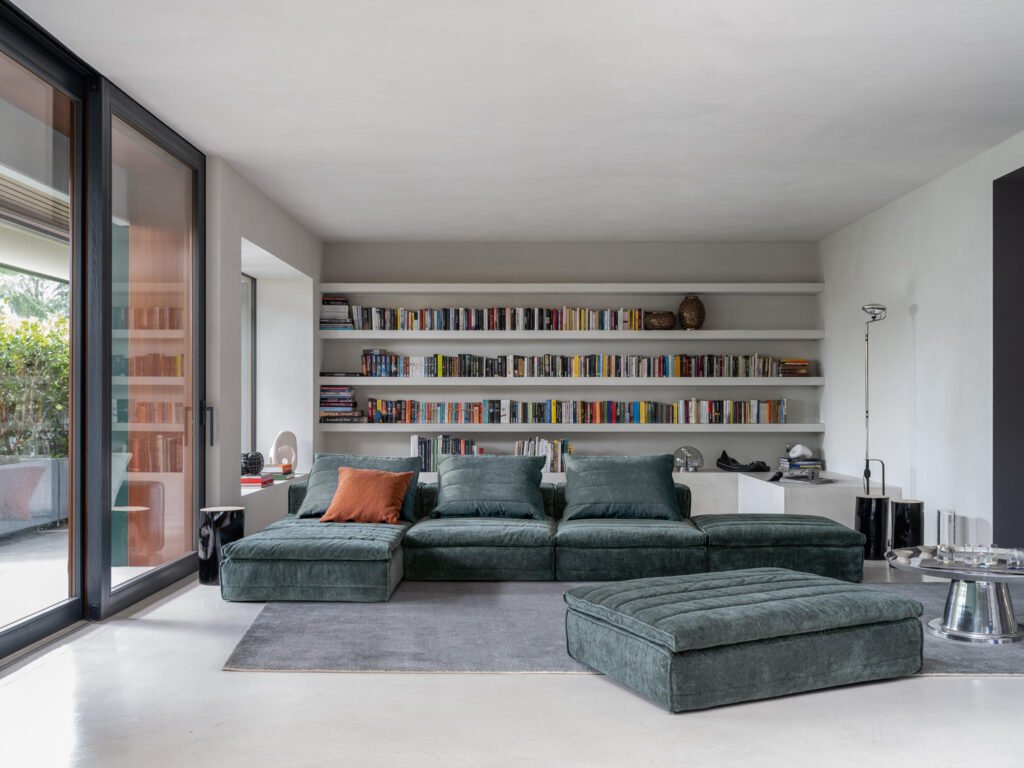
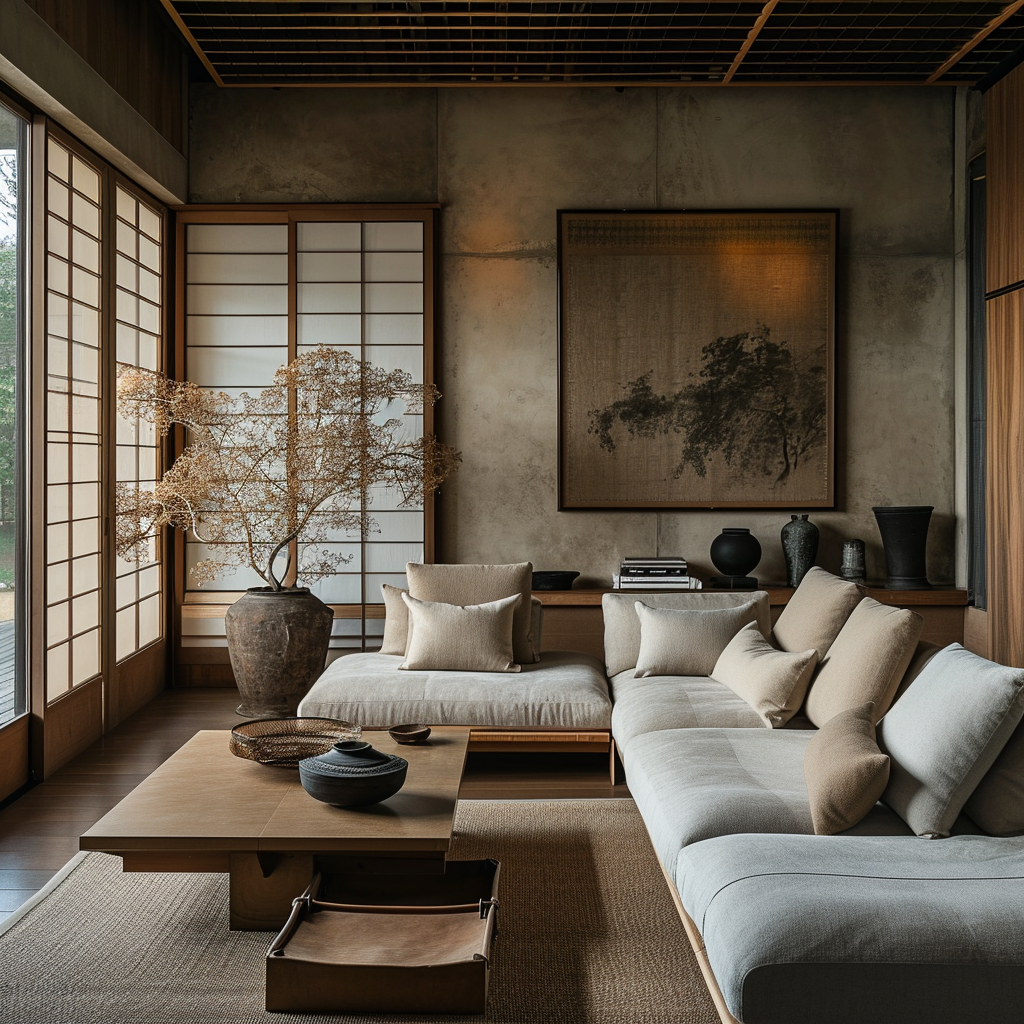
Another important interior design principle for small spaces is the use of low furniture. In home decor and interior design, low furniture helps reduce the visual weight of a room and creates more open space between the floor and the ceiling. This visual openness gives the impression of :
- Higher ceilings.
- creates a lighter, more airy feel (Low furniture creates a vertical–horizontal illusion for a taller, airier space.).
In addition to using vertical elements on your walls, try to keep your bulkier furniture pieces low to the ground to enhance the sense of space and openness in your home.
The Perfect Combo for Bigger Feeling Rooms
So, the perfect and popular combo for Small Room Decorating Ideas That Maximize Space is:
- Low furniture – helps keep the room feeling open and spacious.
- Vertical elements on the wall – this can include:
- Wall art
- Paintings
- Bookshelves
- Curtains, etc…
Flooring direction matters
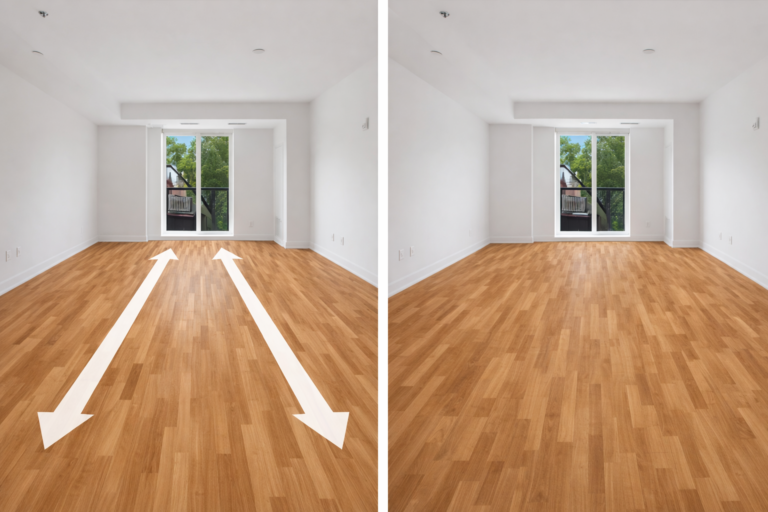
We don’t usually think about which direction our floor runs, but when decorating a small space, laying the flooring parallel to the longest wall can make a huge difference. This simple trick visually stretches the room, making both the space and the floor appear longer than they actually are. Because our eyes naturally follow lines, it’s a simple approach with a big impact.
Light or dark colors for small rooms
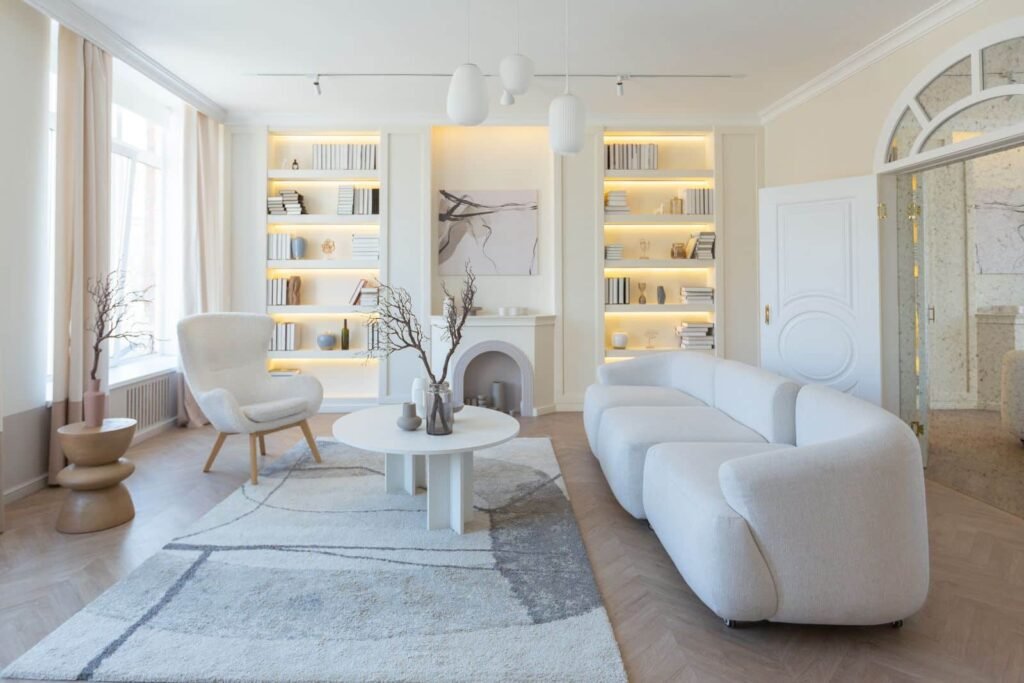
When decorating small spaces, lighter colors—especially white and soft neutrals—have the power to create a calm, open, and airy feeling. In contrast, darker colors such as black or deep blue can feel visually heavy and compressive, making the room appear smaller by limiting how much space the eye can perceive. Using light tones helps reflect more light and visually expand the room, making it feel larger and more comfortable.
Light colors (white, soft neutrals):
- Create a calm and open feeling
- Make the room feel airy
- Reflect more light, visually expanding the space
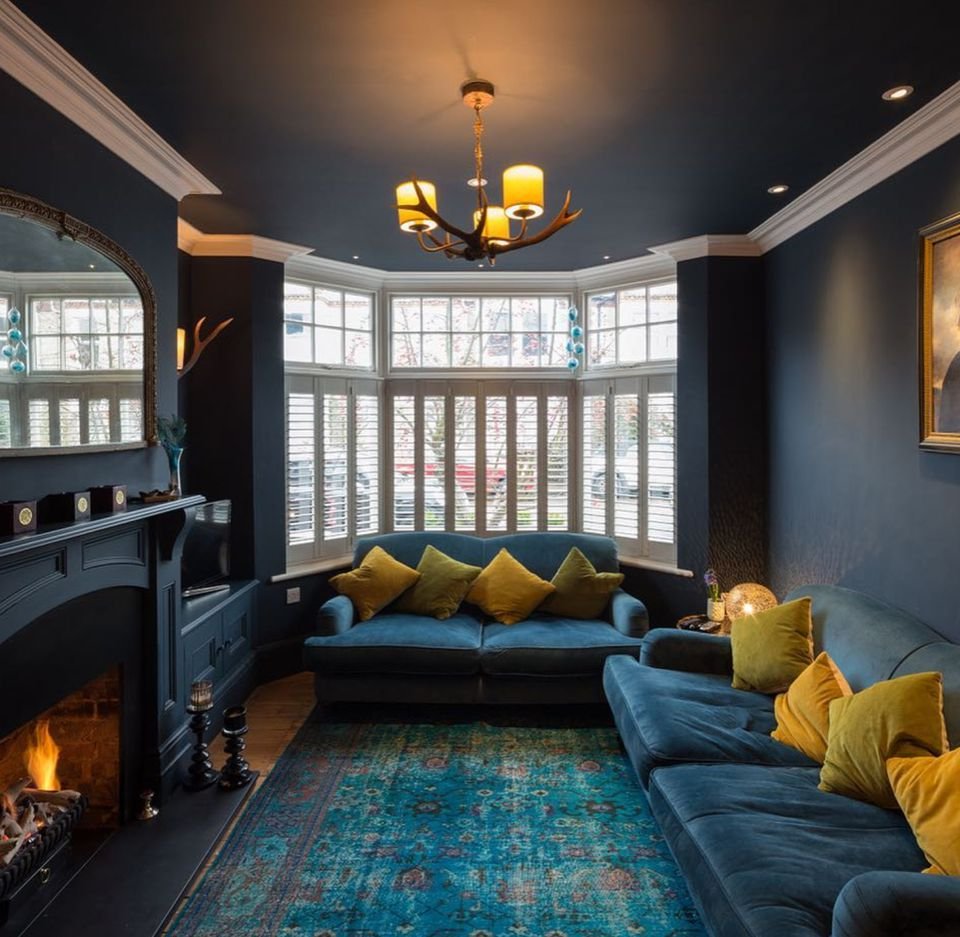
Darck colors (black, deep blue):
- Can feel compressive
- Look heavy
- Make the room look smaller
Use mirrors
Mirrors are one of the most powerful tools for decorating small spaces, transforming cramped rooms into areas that feel significantly more spacious and inviting. Even when we’re fully aware we’re looking at a reflection, mirrors create a compelling optical illusion that makes the space appear larger, brighter, and more open than it actually is.
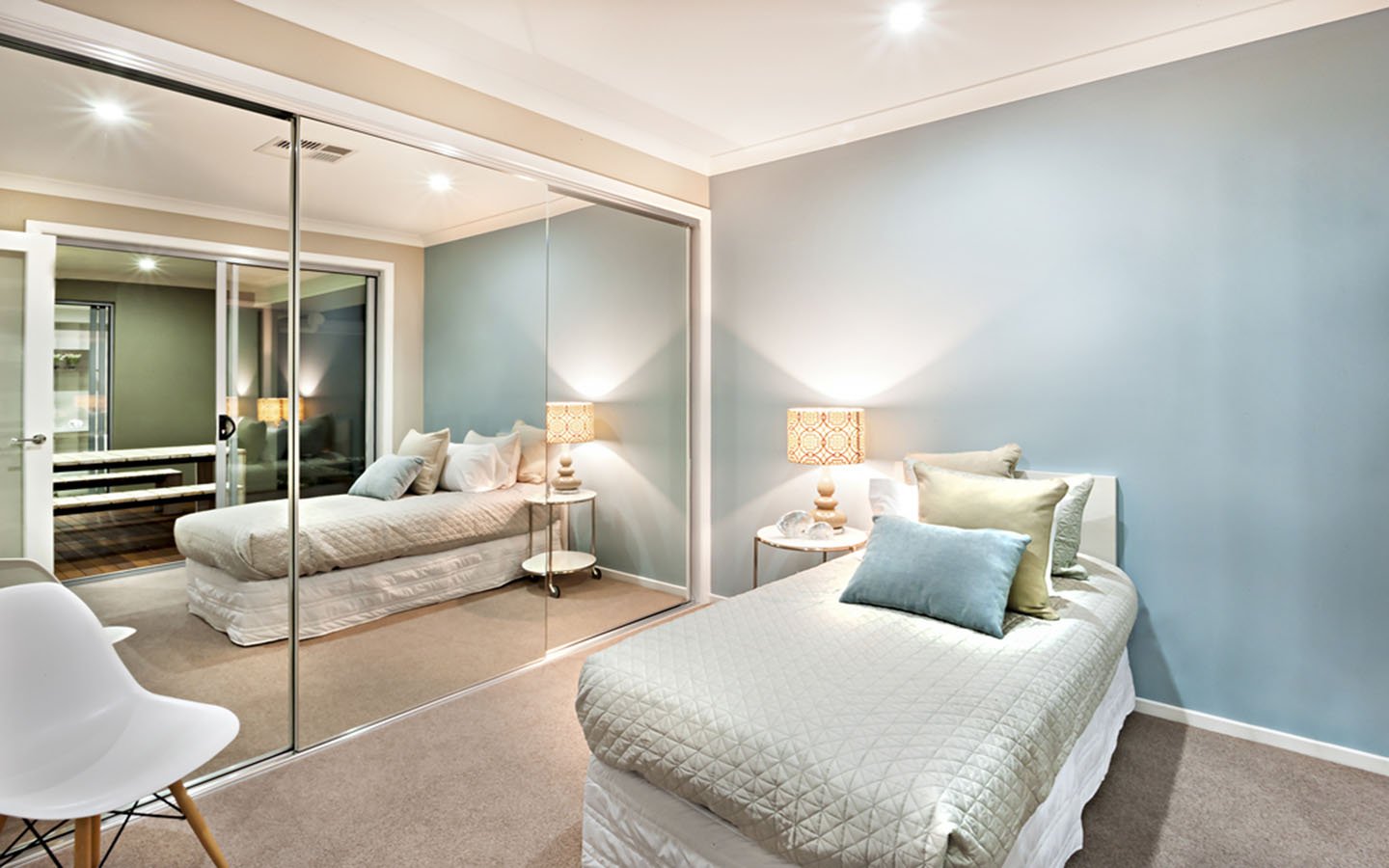
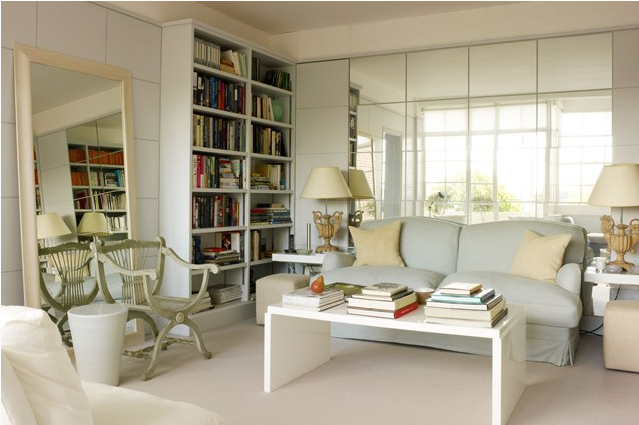
If there are areas in your room that feel cramped or particularly dark and in need of more light, consider hanging a mirror where you think additional brightness would make the most impact. By strategically placing mirrors to reflect natural or artificial light, you can dramatically brighten even the dimmest corners of your space.
Art of hidden space
Storage design can make a room feel either cramped or clean, calm, and expensive. For decorating small spaces, built-in storage that hides items is far more effective than open shelving or exposed storage. Concealing belongings behind cabinet doors or within drawers reduces visual clutter, making your space appear larger, more organized, and more sophisticated.
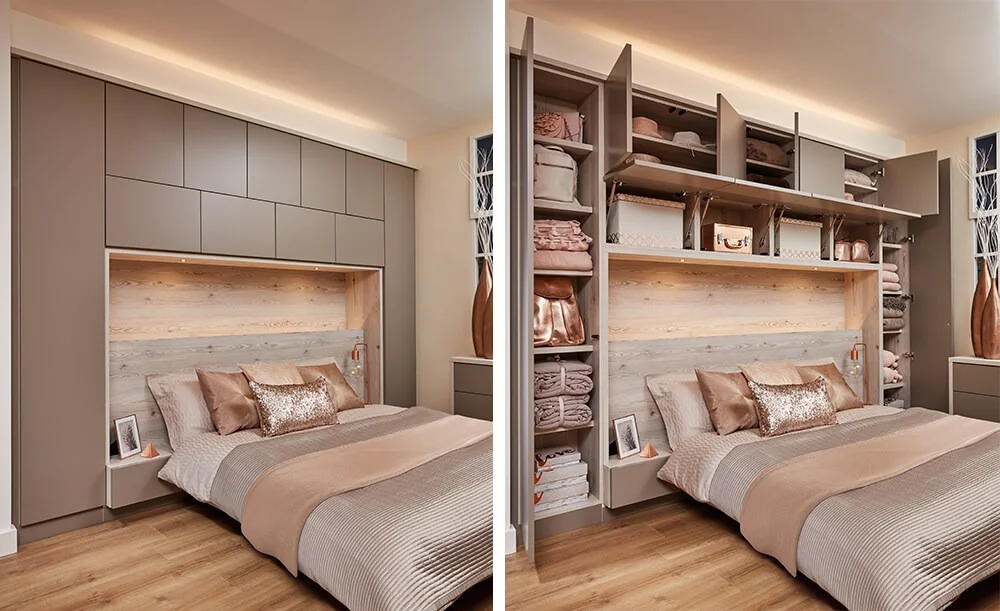
The fewer elements our eyes need to process, the more comfortable and spacious a room feels.
Instead of having all your items, clothes, and books out on display, hide them behind storage doors. This approach reduces visual clutter and creates the streamlined, organized look that makes small spaces feel significantly larger.